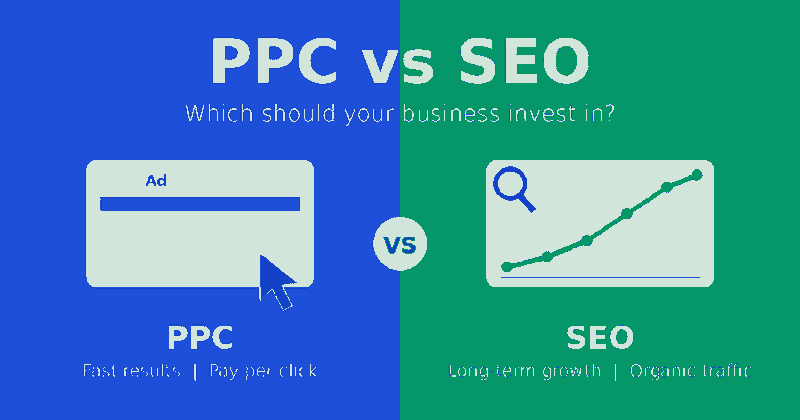
If you’ve ever sat down to plan your digital marketing budget, you’ve probably hit this fork in the road: do you pay for ads, or do you work on ranking organically?
That’s the PPC vs SEO debate, and honestly, there’s no one-size-fits-all answer. Both bring visitors to your site, but they work very differently, cost differently, and pay off on different timelines. Let’s break it down in plain language so you can decide what fits your business.
What Is PPC?
PPC stands for pay-per-click. You bid on keywords, create ads, and pay a small fee each time someone clicks. Google Ads and Microsoft Ads are the big platforms, and social ads on Meta or LinkedIn work on a similar model.
Think of PPC like renting a shop on a busy street. You’re visible the moment you move in, but the second you stop paying rent, you’re gone.
Pros of PPC
- Results come fast, often within hours of launching
- Precise targeting by location, device, audience and intent
- Easy to measure spend, clicks and conversions
- Great for launches, sales and time-sensitive offers
Cons of PPC
- Traffic stops when the budget stops
- Competitive keywords can get expensive
- Ad fatigue and rising costs are common over time
- Many users skip ads and scroll straight to organic results
What Is SEO?
If you’re new to this, here’s the quick answer to what is SEO: search engine optimization is the practice of improving your website so it ranks higher in unpaid search results. That means creating helpful content, structuring your site well, earning quality backlinks and making sure search engines can crawl and understand your pages.
To stick with the analogy, SEO is like buying the shop instead of renting it. It takes longer to build, but once you own the space, the foot traffic keeps coming without paying per visitor.
SEO usually covers three areas:
- On-page SEO: content, titles, headings, keywords and internal links
- Technical SEO: site speed, mobile-friendliness, indexing and schema
- Off-page SEO: backlinks, brand mentions and authority signals
Pros of SEO
- Long-term, compounding traffic
- Higher trust, since people tend to trust organic results more than ads
- Lower cost per visit over time
- Builds brand authority
Cons of SEO
- Results take months, not days
- Rankings can shift with algorithm updates
- Needs consistent effort in content and optimization
PPC vs SEO: Side-by-Side Comparison
| Factor | PPC | SEO |
|---|---|---|
| Speed of results | Immediate | 3-6+ months |
| Cost model | Pay per click | Upfront effort, then low ongoing cost |
| Traffic longevity | Stops when the budget stops | Continues and compounds |
| Click-through trust | Lower | Generally higher |
| Scalability | Scales with budget | Scales with content and authority |
| Best for | Quick wins, launches, promotions | Sustainable growth, brand building |
| Risk | Rising ad costs | Algorithm changes |
Which Is Better: PPC or SEO?
Here’s the honest answer: it depends on your goal, your timeline and your budget.
Choose PPC if:
- You need leads or sales this week, not next quarter
- You’re promoting a limited-time offer or launching a product
- Your website is brand new and has no authority yet
Choose SEO if:
- You’re thinking long-term and want steady, low-cost traffic
- Your budget is limited and you can invest time in content
- You want to build credibility and become a go-to resource in your niche
Choose both if:
- You want the best of both worlds. This is what most successful brands do.
Why the Smartest Brands Use PPC and SEO Together
Treating PPC and SEO as rivals is a bit like asking whether you need a left shoe or a right shoe. They work best as a pair.
- Use PPC to test keywords. Run ads on a few target terms, see which ones convert, then build SEO content around the winners.
- Fill the gap while SEO ramps up. Ads bring traffic while your organic rankings are still growing.
- Dominate the results page. Showing up in both the ad and organic listings for the same query boosts visibility and trust.
- Retarget organic visitors. Someone reads your blog but doesn’t buy? Retargeting ads can bring them back.
This blended approach is at the heart of modern SEO marketing and, more broadly, any solid digital marketing strategy.
How AI SEO Is Changing the Conversation
You can’t talk about search in 2026 without mentioning AI SEO. Search engines now surface AI-generated summaries, and people increasingly get answers from AI assistants before they ever click a link.
What does that mean for you?
- Content quality matters more than ever. Thin, keyword-stuffed pages are getting filtered out. Clear, original, genuinely helpful content wins.
- Answer questions directly. Structure your content with clear headings and concise answers so both people and AI systems can understand and cite it.
- Build topical authority. Covering a subject in depth, rather than one-off posts, signals expertise.
- Use AI as a helper, not a replacement. AI tools can speed up research, outlines and analysis, but human experience, opinion and editing are what make content stand out.
AI has also touched paid search, with automated bidding and campaign types that optimize placements for you. So even PPC now rewards those who understand the data behind the automation.
Essential SEO Tools to Get Started
You don’t need a huge stack to begin. A few solid SEO tools can cover most of what a small business or blogger needs:
- Google Search Console: see how your site performs in Google and which queries bring clicks
- Google Analytics: understand visitor behavior and conversions
- Keyword research tools: find what your audience is actually searching for
- Site audit tools: catch broken links, slow pages and crawl errors
- Bing Webmaster Tools: often overlooked, but useful for indexing and search data beyond Google. If you haven’t set it up yet, this Bing Webmaster Tools tutorial walks you through it step by step.
Tools alone won’t rank your site, of course. They just show you where to focus.
When to Hire SEO Services
Doing SEO in-house is totally doable if you have the time and patience. But there’s a point where professional SEO services make sense:
- You don’t have the time to create and optimize content consistently
- Your traffic has plateaued and you’re not sure why
- You’re dealing with technical issues like poor indexing, site migrations or Core Web Vitals problems
- You want a clear strategy tied to leads and revenue, not just rankings
If you do hire someone, ask about their process, how they report results and what they’ll do in the first 90 days. Be wary of anyone who guarantees a #1 ranking. Nobody can honestly promise that.
Cost Considerations: PPC vs SEO
PPC costs depend on your industry and keywords. You pay for every click, plus the time or agency fees to manage campaigns. A budget can be as small or large as you like, but competitive niches get pricey.
SEO costs are front-loaded. You’ll invest in content, tools, technical fixes and possibly SEO services. The payoff is that once a page ranks, it can keep bringing traffic month after month without a per-click fee.
Over a long enough timeline, SEO usually delivers a lower cost per acquisition. But in the short term, PPC is often the faster route to revenue.
A Simple Way to Decide
Ask yourself three questions:
- How fast do I need results? Days point to PPC. Months are fine? Lean into SEO.
- What’s my budget? Tight budgets often favor SEO. A flexible budget opens up both.
- What’s my long-term goal? If it’s brand authority and steady traffic, SEO should be part of the plan no matter what.
Final Thoughts
The PPC vs SEO question isn’t really about picking a winner. PPC gives you speed and control. SEO gives you staying power and trust. The strongest digital marketing strategies use PPC to move quickly while SEO quietly builds a foundation that keeps paying off.
Start with your goals, test what works, and keep improving. Whether you go it alone with the right SEO tools or bring in expert SEO services, consistency beats perfection every time.
FAQs
Is SEO better than PPC?
Neither is universally better. SEO is stronger for long-term, low-cost traffic, while PPC is better for fast results and targeted campaigns.
Can I do SEO and PPC at the same time?
Yes, and it’s often the best approach. PPC data can inform your SEO keywords, and SEO can reduce your reliance on paid clicks over time.
How long does SEO take to work?
Typically a few months to see meaningful movement, depending on competition, site authority and content quality.
Does AI SEO replace traditional SEO?
No. It builds on it. The fundamentals of helpful content, solid technical health and authority still matter, but the way content is discovered and summarized is evolving.


